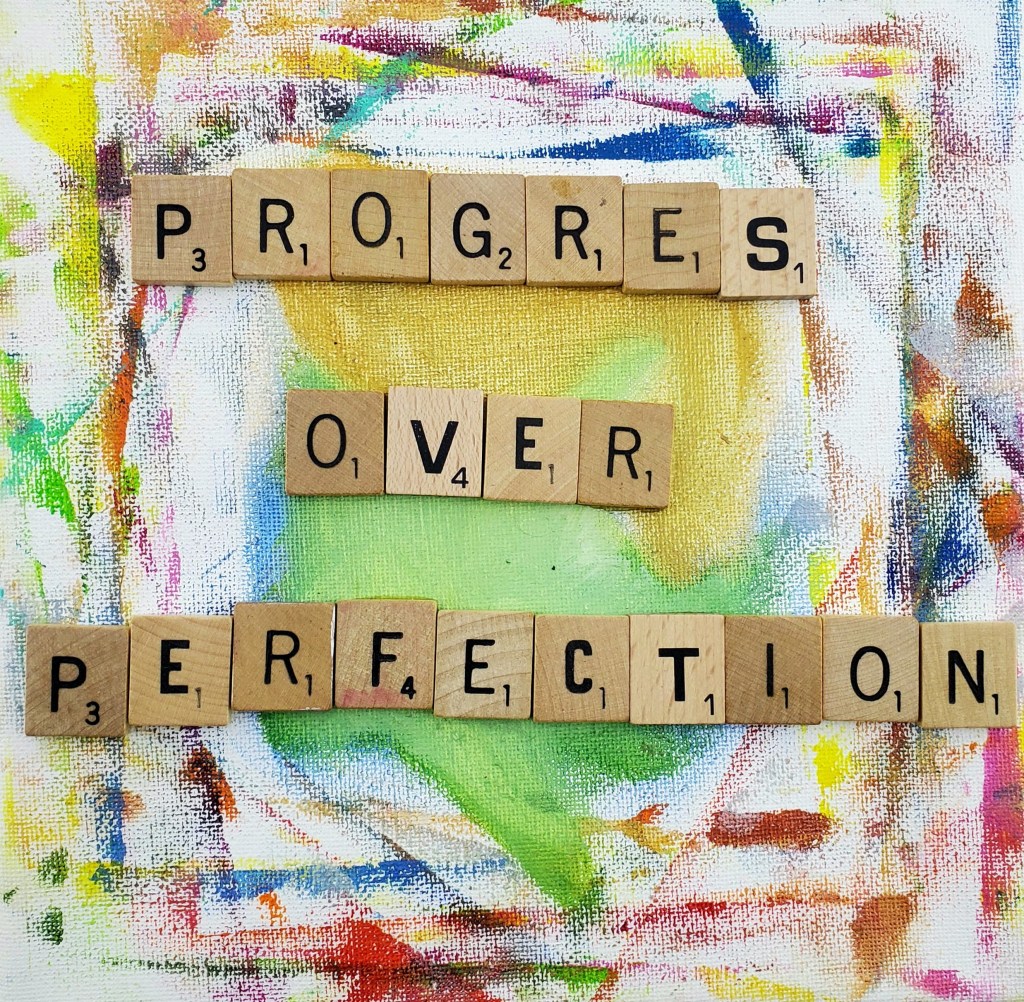
I wanted to kick off my blog by showing you this particular piece, because the message is important to me–and maybe you can relate too.
Perfectionism is all too common, and I have a long history with it.
I was an avid painter as a child. I have many fond memories of sitting with my dad, painting Warhammer models with him. He even selected his armies based on what I wanted to paint the most (I had a lot of fun painting skeletons and vampire bats for the undead army).
I also remember being… probably around nine or ten years old and trying to paint a Warhammer horse. It turned out very silver instead of the shining mostly-white I intended. I don’t remember painting any Warhammer models after that.
I’ve almost failed classes because I didn’t turn in anything that wasn’t “perfect”, and I’ve dropped classes because I wasn’t “good enough” at the subject matter. I’ve tried and given up and tried and given up with art many times. Plenty of writing and other projects never saw the light of day before being deleted.
Perfectionism is, above all else, destructive.
Around twelve years ago, my 11th grade history teacher told me that “the perfect is the enemy of the good.” It’d take me years to understand what he meant, and years more to actually accept it.
Truth be told, I’m not entirely sure what that phrase means, beyond “perfectionism can stop you from doing ‘good enough’”. And truth be told, I still struggle to accept it.
Learning about “deliberate imperfection” has helped–and is why I’ve started making my pieces deliberately imperfect. There’s the wabi sabi Japanese aesthetic, which emphasizes and appreciates things that are imperfect, incomplete, or transient. I couldn’t find a source for this, but I’ve also heard of people giving a piece an imperfection out of humility and religious reasons, as only God is perfect.
This particular piece is both unintentionally and intentionally imperfect.
I accidentally ran out of “S” tiles, so that’s why “Progres” only has one S. I almost stopped the painting there, but realized that it actually fit well with the overall message! The unaligned letters and mixing of the fonts was intentional.
I keep this piece in my living room so I can see it and remember the message more often.
Learn more about Deliberate Imperfection and cultural origins.
 MAC and Brie Make
Leave a comment